In the modern digital ecosystem, the chasm between "activity" and "actual business impact" has never been wider. For decades, marketing departments have been shielded by a dense fog of vanity metrics—data points that look impressive on a slide deck but provide zero insight into the actual health of a company’s bottom line.
During a recent strategic consulting engagement for a global enterprise operating in 75 countries, a chilling realization surfaced: a sub-team responsible for multi-million dollar budgets had anchored their entire success strategy to a metric called "Cost Per Session." For a seasoned professional with two decades of experience, having authored multiple books on analytics and pioneered new measurement tools, this was a shock. It represented a fundamental misunderstanding of marketing’s purpose: treating the acquisition of traffic as the end goal, rather than a bridge to profitability.
This article examines why metrics like Cost Per Session are not just inadequate—they are dangerous—and why the shift toward "Accountability over Outcomes over Activity" is the only way to insulate your career and your company against the looming disruption of the AI-driven marketplace.
The Illusion of Activity: Deconstructing "Cost Per Session"
When marketing teams prioritize Cost Per Session (CPS), they are essentially admitting to a strategy of "shoveling traffic." The logic is seductive: if we can buy a website visit for pennies, we have successfully optimized our funnel. However, this ignores the foundational reality of business. Traffic is a commodity; conversion is the objective.
The Problem with "Things," Not Metrics
Industry-standard metrics like Impressions and Views suffer from the same fatal flaw as CPS. They are "things"—events that occur without intent or value. If a marketing campaign generates a million impressions but results in zero sales, the campaign is a failure, regardless of how cheap the impressions were. By focusing on these low-level activity metrics, marketing leaders inadvertently invite the CFO to devalue their entire department. When a CFO sees marketing spending on "sessions" rather than "profit," they view the department as a cost center to be trimmed, not an engine of growth to be fueled.
A Chronology of Strategic Evolution
To understand how we arrived at this crisis of measurement, one must look at the progression of marketing analytics over the last twenty years.
- The Era of Traffic (Early 2000s): The dawn of digital marketing focused on reach. If you could get someone to your site, you were winning. Metrics like Page Views and Unique Visitors dominated.
- The Era of Outcomes (2010s): With the rise of sophisticated e-commerce, the focus shifted to conversions. We started measuring Revenue, Conversion Rates, and Lead-to-Sale ratios. This was a significant step forward, but still incomplete.
- The Era of Accountability (Today): We are now in the age of the "Marketing-Loving CFO." Simply hitting a revenue goal is no longer enough. The modern CFO asks: "What was the incremental cost of that revenue, and what was the net profit contribution?"
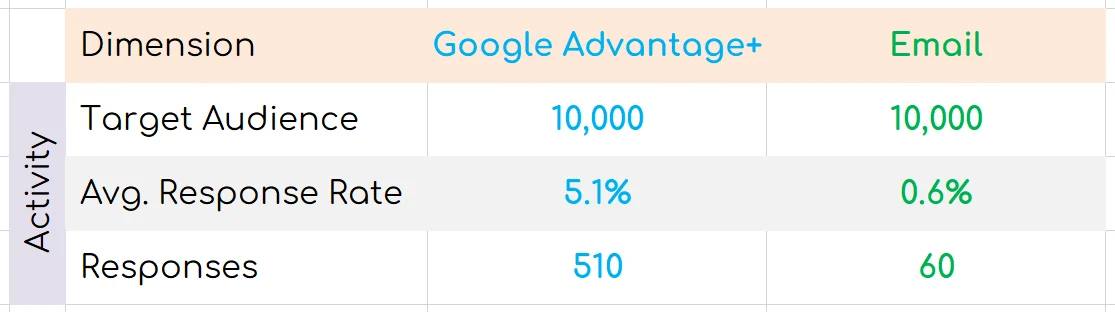
The case study from the aforementioned global firm provides a perfect example of this transition. Initially, the team reported success through Google Advantage+ campaigns based on volume. When pushed to report on outcomes, they highlighted Revenue. Finally, when forced into an Accountability view—subtracting Campaign Costs and Cost of Goods Sold (COGS)—the true picture emerged. The platform that looked like a winner on "Revenue" was actually a profit-drainer when viewed through the lens of "Profit on Investment" (POI).
Supporting Data: The Accountability Framework
To effectively communicate with a CFO, marketing must adopt a hierarchy of accountability. Using the data from our case study, we can compare how different lenses change the narrative of success:
1. The Activity View (The "Vanity" Lens)
- Metric: Impressions, Clicks, Cost Per Session.
- Result: High volume, low visibility into value.
2. The Outcomes View (The "Marketing" Lens)
- Metric: Revenue, Conversion Rate, Total Orders.
- Result: Encouraging, but lacks the context of efficiency.
3. The Accountability View (The "CFO" Lens)
- Metric: POAS (Profit on Ad Spend) and POI (Profit on Investment).
- Formula: (Total Revenue – Campaign Cost – COGS) / Total Investment.
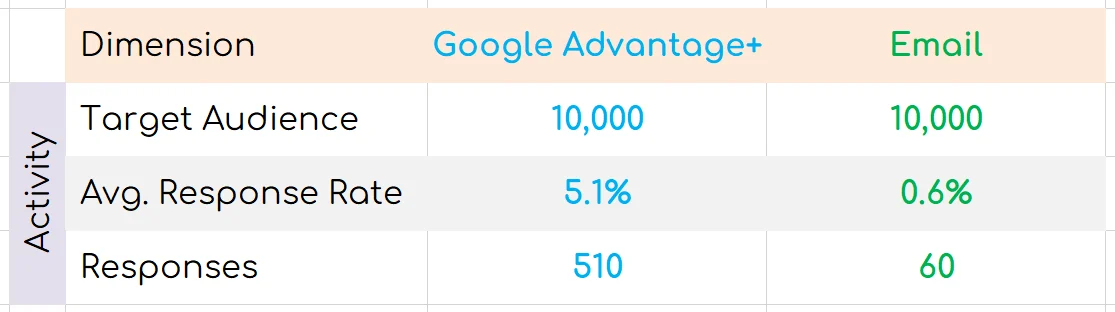
In the case study, Google Advantage+ generated 173 orders compared to Email’s 14. A shallow analysis would demand more budget for Google. However, the Accountability View revealed that for every $1 spent on Google, the company generated only $0.70 in profit. Conversely, Email generated $5.70 in profit for every $1 spent. The data proves that scale without accountability is merely the rapid acceleration of loss.
Official Guidance: The AI-Driven Future
Google itself has recently acknowledged that the old way of measuring traffic is obsolete. In their guidance for "Succeeding in AI Search," the tech giant explicitly warns against over-optimizing for clicks.
Google’s official stance states: "Consider looking at various indicators of conversion on your site, be it sales, signups, a more engaged audience, or information lookups… you might not optimize for these if you focus too much on clicks instead of the overall value of your visits."
This is a critical pivot. As Search Generative Experience (SGE) and AI-driven answers become the norm, the "classic" traffic session is changing. Users are becoming more informed before they ever click. If your marketing strategy is built on the archaic desire to maximize cheap sessions, you are not only misaligned with your CFO—you are misaligned with the very search engines that drive your traffic.
Implications for the Modern CMO
The implications of this shift are profound. Marketing departments that continue to hide behind Cost Per Session or high-level vanity metrics will find themselves increasingly isolated as companies tighten budgets in response to economic volatility and the rising costs of AI-powered advertising.
Step-by-Step Strategic Realignment
- Adopt "Suck Less" Metrics: If you cannot immediately transition to full POI, shift from "Cost Per Session" to "Cost Per Non-Bounced Session." It forces the team to account for the quality of the traffic they are paying for.
- Mandate Profitability over Scale: Stop celebrating volume. If a channel is scaling at the expense of profit, it is not a marketing success—it is a business liability.
- Bridge the Gap with the CFO: Proactively provide the "Full Business Impact View." Show the CFO that you understand COGS, CAC (Customer Acquisition Cost), and LTV (Lifetime Value). This transparency builds the trust necessary to unlock larger budgets.
- Prepare for AI Search: Shift focus from "acquisition" to "intent fulfillment." AI search will filter out the low-quality sessions you are currently paying for; ensure your site is optimized to convert the high-intent traffic that AI will direct to you.
Conclusion: The AI-Disruption-Proof Career
The marketing professional of the future is part-analyst, part-strategist, and part-economist. The era of the "creative-only" marketer who avoids the spreadsheet is coming to a close. By prioritizing Accountability over Outcomes, and Outcomes over Activity, you insulate yourself from the whims of market shifts.
When you demonstrate to your leadership that you are managing the company’s profit—not just its traffic—you become an indispensable partner to the CFO. In a world where AI can automate the creation of ads and the targeting of audiences, the ability to interpret business impact and drive genuine, incremental profit is the one skill that remains irreplaceable.
Stop measuring the noise. Start measuring the impact. Your career, and your company’s future, depend on it.