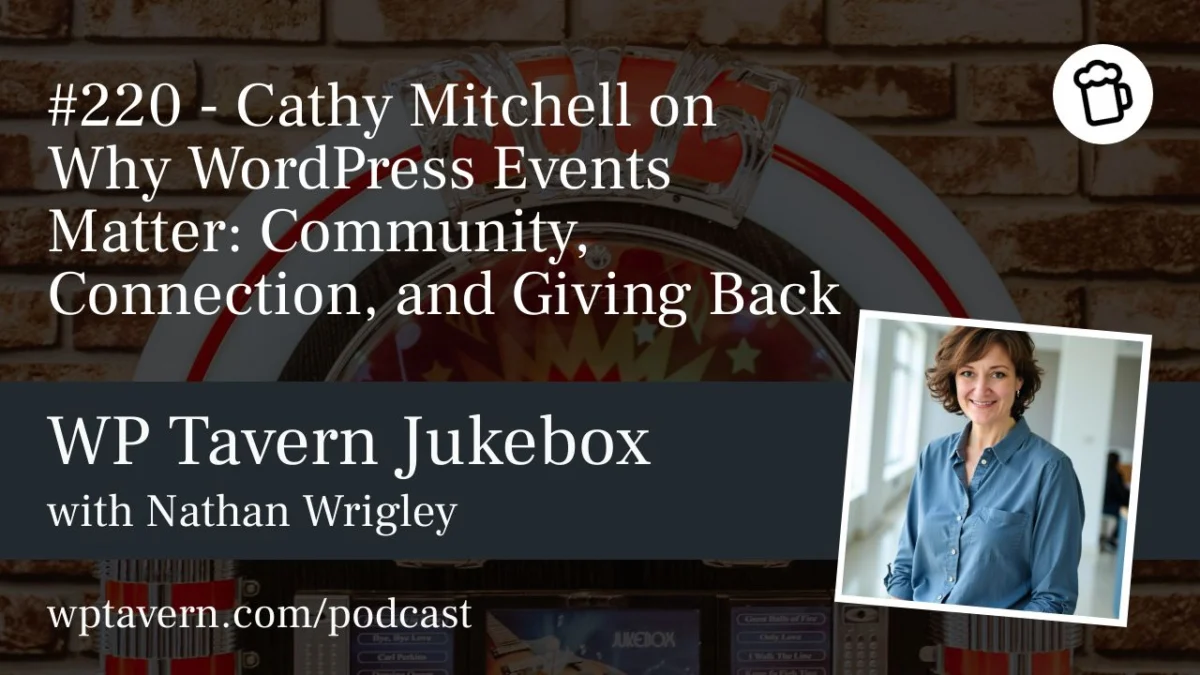
The digital world often feels increasingly isolated, transactional, and dominated by walled gardens. Yet, nestled within the expansive global infrastructure of open source, the WordPress community continues to offer a striking counter-narrative. Recently featured on the Jukebox Podcast from WP Tavern, host Nathan Wrigley sat down with veteran developer and event organizer Cathy Mitchell to explore the human side of WordPress, the enduring power of community, and the profound role that volunteering plays in fostering connection, combating loneliness, and driving technological momentum.
Mitchell, who launched her WordPress journey in 2007 and founded WPBarista in 2008, brings a unique business-first perspective to the ecosystem. However, her recent trajectory—moving from a casual volunteer to the lead organizer for the upcoming WordCamp Canada—highlights a broader, recurring phenomenon within the WordPress space: a rare culture of radical openness, grassroots empowerment, and profound human connection.
Main Facts: The Human and Corporate Anatomy of WordPress
At its core, the conversation between Wrigley and Mitchell peels back the layers of what makes open-source ecosystems endure. While software powers websites, it is people who power communities.
- The Loneliness Epidemic: Referencing public health reports, the discussion noted that loneliness has reached epidemic levels globally—impacting younger generations disproportionately. Service, volunteering, and shared spaces are increasingly viewed by sociologists as vital antidotes.
- Low Barriers to Entry: Unlike traditional corporate environments characterized by rigid hierarchies and extensive red tape, the WordPress community operates on a "say yes" philosophy, quickly integrating newcomers into meaningful roles.
- The Economic and Sponsorship Shift: As the tech industry faces economic tightening and the disruptive rise of artificial intelligence, corporate sponsorships for community events are undergoing a recalibration, demanding clearer value propositions alongside traditional altruism.
- Investing in the Future: Long-term sustainability requires deliberate engagement with the next generation through open-source education, university credit initiatives, and grassroots mentorship.
Chronology: From Forum Support to National Leadership
Mitchell’s path through the WordPress ecosystem illustrates how individual participation can organically evolve into community leadership over nearly two decades.
2007–2008: The Accidental Beginning
During her maternity leave, Mitchell began using WordPress as a fun, creative outlet. Lacking formal programming knowledge in PHP or HTML—and needing diagrams from her husband just to understand how computers communicated over the internet—she turned to the official WordPress support forums. There, she learned directly from early ecosystem pioneers who patiently answered basic questions.
2008: Launching WPBarista
What started as a hobby quickly transitioned into a commercial venture. Recognizing that her time had professional value, Mitchell launched her WordPress-focused business, WPBarista, balancing entrepreneurship with raising a young family.
2024–2025: Stepping Into Community Organizing
After years of maintaining a purely business-driven approach, Mitchell found herself looking for meaningful outlets as an "empty nester"—a life stage where parents adjust to children leaving home. Reached out to via the Canadian WordPress Slack channel, she agreed to help with local event planning. To her surprise, she was quickly welcomed onto the organizing committee for WordCamp.
2026: Leading WordCamp Canada
Reflecting a culture where initiative is rewarded with responsibility, Mitchell found herself stepping up to lead WordCamp Canada. This transition from a pragmatic, bottom-line-focused business owner to a passionate community leader underscores the magnetic, transformative pull of open-source stewardship.
Supporting Data: Understanding Modern Isolation and Engagement
The conversation naturally drifted toward broader sociological trends affecting modern contributors, particularly the intersection of technology, digital consumption, and mental health.
Citations during the podcast highlighted the 2023 declaration by U.S. Surgeon General Vivek Murthy regarding a national "loneliness epidemic." Data indicated that younger demographics—particularly individuals aged 18 to 24—report staggering rates of loneliness, with roughly 79% experiencing feelings of isolation, compared to roughly 41% among older adults.
Paradoxically, the very technology designed to connect humanity has often fostered environments of isolated consumption. Streaming services, algorithmic social media feeds, and self-contained digital entertainment allow individuals to bypass physical proximity and shared human experiences entirely.
Against this backdrop, volunteer-driven physical and hybrid events like WordCamps serve a vital corrective function. Citing informal psychological observations on happiness, Wrigley and Mitchell noted two primary drivers of human fulfillment:
- Interpersonal Proximity: Regularly sharing physical and psychological space with other human beings pursuing common goals.
- Altruism: Contributing time, energy, and resources without the immediate expectation of a transactional return.
Official Perspectives: The Business Case for Open Source
For business owners and corporate sponsors, participating in open source has traditionally been viewed through a lens of community goodwill. However, in an era marked by tighter economic margins and fierce market competition, the justification for financial sponsorship requires deeper strategic evaluation.
Mitchell highlights that corporate participation provides tangible mutual benefits:
- Streamlined Hiring and Vetting: Companies actively involved in the open-source community find it significantly easier to source, evaluate, and attract talent who share foundational technical and cultural values.
- Ecosystem Health: As Mitchell noted, "The healthier the community, the healthier all of us are." A thriving open-source project directly underpins the commercial viability of agencies, plugin developers, and theme shops built upon its framework.
- The Rise of AI Synergy: With artificial intelligence increasingly capable of interacting with codebases, the accessibility of open-source repositories ensures that foundational technology remains open rather than trapped behind corporate paywalls.
Implications: Securing the Next Generation of Open Source
As WordPress navigates a post-growth maturity phase—moving away from the hyper-expansion of the 2010s toward a more consolidated landscape—the project faces the critical task of future-proofing its community.
Engaging Youth and Academia
Initiatives like Campus Connect and university credit programs are beginning to bridge the gap between formal education and open-source contribution. By introducing high school and university students to collaborative software development, communities ensure a continuous influx of fresh talent. WordCamp events in regions like Vancouver are increasingly looking to formalize these educational pipelines, allowing students to gain academic credit while learning real-world collaboration skills.
Preserving the "Secret Sauce"
Despite criticisms and internal governance debates—including scrutiny faced by project co-creator Matt Mullenweg—the foundational culture fostered within WordPress remains remarkably resilient. The volunteer-led community teams, local meetups, and regional WordCamps have established a welcoming baseline that continuously surprises newcomers accustomed to corporate bureaucracy.
Ultimately, the future of WordPress does not rest solely on core code updates or commercial enterprise software metrics; it relies on the intangible camaraderie of individuals sitting together in a room, pointing in the same direction, and building something larger than themselves.