In the competitive landscape of digital advertising, the "click" is often treated as the ultimate prize. Marketing departments celebrate high Click-Through Rates (CTR) and low Costs Per Click (CPC) as definitive markers of success. However, a growing body of evidence suggests that many Pay-Per-Click (PPC) campaigns are quietly hemorrhaging budgets not because of poor targeting, but because of a fundamental disconnect between the advertisement and the destination.
The landing page is the critical bridge between a user’s intent and a business’s bottom line. When this bridge is poorly constructed—offering generic content in response to specific queries—conversions vanish. This report examines the mechanics of landing page failure, the evolving science of search intent, and the strategic shifts required to turn expensive traffic into sustainable revenue.
1. Main Facts: The "Specificity Gap" in Modern PPC
The primary reason PPC campaigns fail to convert is what industry experts call the "Specificity Gap." This occurs when a user searches for a highly specific solution, clicks an ad promising that solution, but is directed to a broad homepage or a generic service page.
The Breakdown of Trust
The moment a user clicks an ad, a psychological contract is formed. The user provides their attention and a potential lead in exchange for a specific answer. If the landing page requires the user to "hunt" for the information promised in the ad—such as a specific discount, a niche service feature, or a pricing tier—the contract is breached.
The Burden of Friction
In digital marketing, "friction" refers to any element that slows down or prevents a user from completing a desired action. Friction can be technical (slow load times) or cognitive (confusing navigation). When a landing page is too broad, it increases the cognitive load on the user. They must filter out irrelevant information to find what they need. In a world of infinite choices, most users will simply "bounce" back to the search results rather than do the work for the advertiser.
The Multi-Page Necessity
Modern PPC strategy has moved away from the "one-size-fits-all" model. To maintain high conversion rates, businesses now require a library of landing pages tailored to:
- Specific Search Queries: Matching the exact terminology used by the searcher.
- Audience Segments: Addressing different industries or demographics (e.g., a CRM for recruiters vs. a CRM for real estate agents).
- Stages of Intent: Recognizing whether a user is researching, comparing, or ready to buy.
2. Chronology: The Evolution of the Landing Page Experience
To understand the current crisis in PPC conversion, one must look at how the digital advertising ecosystem has matured over the last two decades.
The Early Era (2000–2010): The Homepage Destination
In the early days of Google AdWords, the digital marketplace was less crowded. Advertisers often directed all paid traffic to their homepage. Because competition was low and user expectations were still forming, this rudimentary approach often yielded results. The goal was simply "traffic."

The Middle Era (2011–2018): The Rise of the Lead Gen Page
As competition increased and CPCs rose, marketers began to realize that homepages were too distracting. The industry saw a surge in dedicated "Lead Gen" pages—static, one-page sites with a single form and no navigation. While more effective than homepages, these pages were often still too generic, treating every visitor the same regardless of their specific search query.
The Modern Era (2019–Present): The Intent-Driven Framework
Today, the "Quality Score" algorithms used by platforms like Google and Bing have become highly sophisticated. They now penalize advertisers who provide a poor landing page experience. We have entered the era of Hyper-Personalization. Successful campaigns now use Dynamic Keyword Insertion (DKI) and modular page designs to ensure that the landing page mirrors the ad copy almost perfectly. The focus has shifted from "getting the click" to "honoring the intent."
3. Supporting Data: The Economics of Relevance
The financial implications of landing page optimization are stark. Data from industry benchmarks and behavioral analytics tools provide a clear picture of why relevance is the most valuable currency in PPC.
Conversion Rate Disparities
According to data from WordStream and Unbounce, the average conversion rate across all industries for PPC is roughly 2.35%. However, the top 10% of advertisers see conversion rates of 11.45% or higher. The differentiating factor is rarely the ad itself, but the relevance of the landing page.
The Cost of a Second
Research by Google indicates that 53% of mobile site visits are abandoned if a page takes longer than three seconds to load. Furthermore, for every one-second delay in site load time, conversions can fall by up to 20%. When a landing page is bloated with generic content meant to serve "everyone," it often suffers from these technical delays, compounding the loss of revenue.
Behavioral Indicators of Mismatch
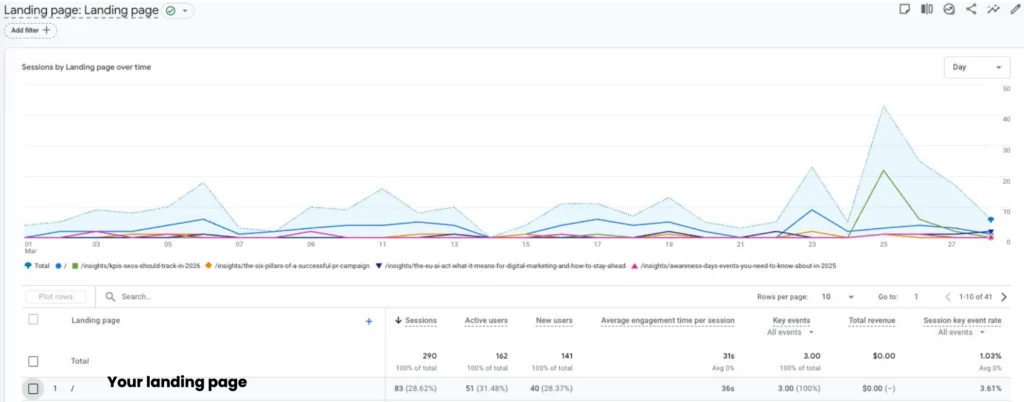
Using tools like Microsoft Clarity and Google Analytics 4 (GA4), marketers can now quantify "frustration signals." Key metrics include:
- Rage Clicks: Users clicking rapidly on an element that isn’t a link, often out of confusion.
- Dead Clicks: Clicks that result in no page action, indicating a UI failure.
- Excessive Scrolling: A sign that the user is searching for information that should have been "above the fold."
- High Bounce Rates on High-Intent Keywords: If a user searches for "Buy [Product Name] Now" and bounces within 5 seconds, the page has failed to meet a transactional expectation.
4. Official Responses and Expert Standards: Categorizing Intent
Industry leaders and search engine architects have standardized the way we categorize user intent. To bridge the Specificity Gap, experts recommend aligning landing pages with one of three primary intent stages.
I. Transactional Intent (The "Doers")
These users are at the bottom of the funnel. They have done their research and are ready to purchase or sign up.

- Expert Recommendation: "Eliminate all distractions," says digital strategist Sarah Jenkins. "At this stage, the landing page should be a frictionless path to the finish line."
- Key Elements: Bold "Buy Now" or "Get Started" buttons, clear pricing, and minimal form fields.
II. Commercial Investigation (The "Researchers")
These users know they have a problem and are comparing solutions. They are looking for the "best" or "cheapest" or "most reliable" option.
- Expert Recommendation: This is where social proof becomes the primary driver of conversion. Use case studies, comparison tables, and third-party reviews (e.g., Trustpilot or G2 badges).
- Key Elements: Feature-by-feature comparisons and "Why Us" sections.
III. Informational Intent (The "Learners")
These users are at the top of the funnel. They are looking for answers, not necessarily products.
- Expert Recommendation: Forcing a "hard sell" on an informational search is a recipe for a high bounce rate. Instead, offer "soft conversions" like a downloadable whitepaper or a newsletter sign-up.
- Key Elements: Educational content, FAQs, and long-form explanations that build brand authority.
5. Implications: The Future of PPC and the ROI of Precision
The shift toward high-relevance landing pages has profound implications for the future of digital marketing and business profitability.
The End of the "Lazy Marketer"
The era of setting up a single campaign and letting it run for months is over. The requirement for multiple, intent-based landing pages means that PPC is now as much a "creative and UX" discipline as it is a "data and bidding" discipline. Businesses that do not invest in continuous landing page optimization will see their Customer Acquisition Costs (CAC) rise to unsustainable levels as platforms reward higher-quality experiences with lower CPCs.
The Role of AI and Automation
We are seeing the rise of AI-driven landing page builders that can generate hundreds of variations of a page to match specific keyword clusters. The implication is a future where the landing page is not a static asset, but a dynamic environment that assembles itself in real-time based on the user’s search history, device, and location.
Strategic Conclusion
If a PPC campaign is underperforming, the instinct is often to tweak the keywords or the bid strategy. However, the evidence suggests that the "silent killer" is usually the destination. By treating the landing page as a continuation of the search query rather than a separate destination, businesses can reduce friction, build immediate trust, and significantly increase their return on ad spend.
The goal is no longer just to find the user; it is to prove to the user—within the first three seconds of their arrival—that they have finally found exactly what they were looking for.