The rapid ascent of generative Artificial Intelligence—from sophisticated large language models to high-fidelity image generators—has triggered a palpable sense of existential dread within the creative industries. Designers, writers, and artists, once secure in their roles as the architects of visual and narrative culture, now find themselves questioning their professional longevity. As AI tools demonstrate an uncanny ability to generate layouts, mockups, and copy in seconds, the narrative of "AI replacing creators" has moved from speculative fiction to boardroom reality.
However, a closer examination of the design process reveals that the core of impactful design is not merely the production of an artifact, but the application of distinctly human behaviors. While machines excel at processing vast datasets to mimic patterns, they remain fundamentally incapable of replicating the "designerly" skills—curiosity, empathy, and advocacy—that transform data into meaningful, human-centered solutions.
The Chronology of Disruption and Adaptation
The anxiety surrounding AI is not entirely without precedent. Throughout history, every technological leap—from the printing press to the advent of desktop publishing—has sparked fears of obsolescence.

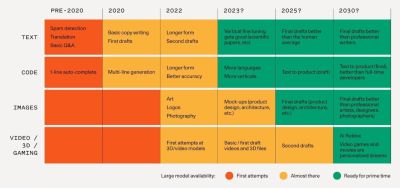
- The Early Stage: AI development initially focused on simple pattern recognition and predictive text, serving as a back-end utility for data scientists.
- The Generative Shift: With the arrival of models like GPT-4 and Midjourney, AI transitioned from a tool of analysis to a tool of creation. This shifted the conversation from "How can AI help me organize data?" to "Can AI replace my creative output?"
- The Current Landscape: We are currently in a phase of "forced integration," where creators are forced to reconcile their established workflows with AI-assisted automation. The challenge is no longer about whether AI is capable of producing work, but whether that work meets the nuanced, context-dependent needs of human users.
The "Designerly" Advantage: Head, Heart, and Hands
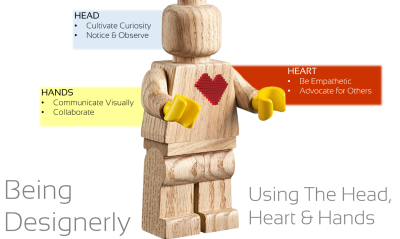
To understand why humans retain a decisive advantage, we must look at the framework of "designerly" thinking—a term popularized by educator Nigel Cross to describe the underlying patterns of how designers think and act. By mapping these skills to the "Head, Heart, and Hands" model, we can see where AI falters and where human intuition reigns supreme.
The Head: Thinking Like a Designer
The cognitive domain of design relies on Curiosity and Observation. AI is fundamentally reactive; it is programmed to provide an answer based on existing data. In contrast, true design curiosity is proactive—it is the desire to explore the unknown.
When a designer steps into a user’s environment—such as a sales representative navigating a sub-zero freezer in a retail store—they aren’t just looking for data; they are observing human friction. They see the way a user juggles multiple devices while trying not to obstruct a shopper. This form of "situational intelligence" cannot be programmed. AI lacks the physical sensory experience and the ability to derive meaning from the messy, non-linear realities of the real world.
The Heart: The Emotional Core
Design is ultimately an act of empathy. Roman Krznaric defines empathy as the art of stepping imaginatively into the shoes of another person.
AI can be trained to recognize the sentiment of a text or the expression on a face, but it cannot feel the weight of a user’s frustration. It does not possess a subconscious shaped by a lifetime of diverse experiences, cultural context, and wisdom. This emotional intelligence is what allows a designer to act as a User Advocate. An advocate does not just build what the data says; they represent the interests of the user in an environment of competing corporate priorities. When an AI is tasked with an ethical decision, it merely follows the guardrails set by its developers. A human, however, can make a moral judgment call, recognizing when a design choice might be efficient but ultimately harmful.
The Hands: Action and Collaboration
The "Hands" represent the execution of design—Visual Communication and Collaboration.
Storytelling is the bridge between a raw idea and a solution that resonates. Visual communication is not just about making things look "good"; it is about creating a shared mental model among stakeholders. When a designer sketches on a whiteboard, they are negotiating social dynamics, adapting to real-time feedback, and synthesizing disparate perspectives.
Collaboration is inherently a social act. It requires negotiation, compromise, and the ability to pivot based on the room’s energy—capabilities that remain firmly in the human domain.
Supporting Data: The Limitations of Synthetic Intelligence
The assumption that AI will replace humans is built on a flawed premise: that processing power is equivalent to intelligence. As of 2023, AI models are trained on unprecedented amounts of data—by some estimates, the equivalent of a quarter of the Library of Congress.
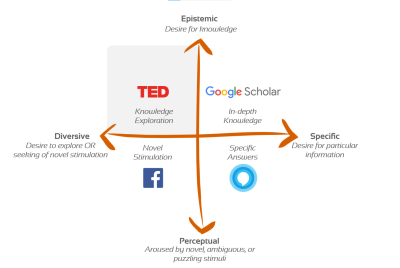
While this allows AI to analyze patterns with incredible speed and accuracy, it also creates a "stagnation loop." AI is bound by the dataset it was trained on; it cannot invent a new paradigm because it can only interpolate based on existing information. Furthermore, AI often struggles with factual accuracy. As seen in recent AI-generated outputs that hallucinate biographies or professional credentials, the technology currently lacks the "self-awareness" to verify its own truth.
Implications for the Future of Work
The rise of AI does not herald the end of design; it heralds the end of manual labor in design.
The restaurant industry offers a perfect analogy: robots have been introduced to kitchens to handle repetitive tasks like flipping burgers or chopping vegetables, yet the role of the Head Chef remains more vital than ever. The Chef focuses on the strategic planning, the balancing of flavors, and the final quality control that turns a meal into an experience.

For designers, the implication is clear:
- Shift to Strategy: AI will handle the tactical execution—generating variations, transcribing interviews, or formatting layouts—leaving the designer free to focus on strategic problem-solving.
- Focus on the Human Element: As AI-generated content becomes commoditized and ubiquitous, the value of human-centered, empathetic, and culturally nuanced design will skyrocket. The "human touch" will become a premium differentiator.
- Collaborative Workflow: The most successful professionals will be those who view AI as a "creative intern." It is a tool for ideation and efficiency, but the final decision-making authority must remain with the human who understands the context, the client, and the end-user.
Conclusion: A Collaborative Future
The fear that AI will render designers redundant overlooks the reality that design is a service to humanity. Because AI is not a conscious being, it cannot understand the "why" behind human behavior. It cannot hold the space for a user’s pain, nor can it advocate for a solution that aligns with human ethics and long-term societal well-being.
By cultivating our "designerly" skills—our curiosity, our empathy, and our ability to tell stories that move people—we ensure that our value remains beyond the reach of any algorithm. The future belongs to those who use AI to augment their capabilities, not replace their humanity. As we move forward, the question shouldn’t be whether AI can do our jobs, but how we can use this powerful new technology to better serve the people who rely on our creativity, our judgment, and our uniquely human perspective.