By Global Business Insights Staff
Published in partnership with Social Media Examiner
Main Facts: The Paradigm Shift in Social Advertising
In the fast-paced ecosystem of modern social media advertising—spanning platforms like Facebook, Instagram, and TikTok—marketers have long relied on guesswork, superficial metrics, and outdated audience personas. However, a major paradigm shift is underway. By integrating behavioral science, consumer psychology, and modern artificial intelligence (AI), brands are moving away from trial-and-error marketing and entering an era of predictable, scalable success.
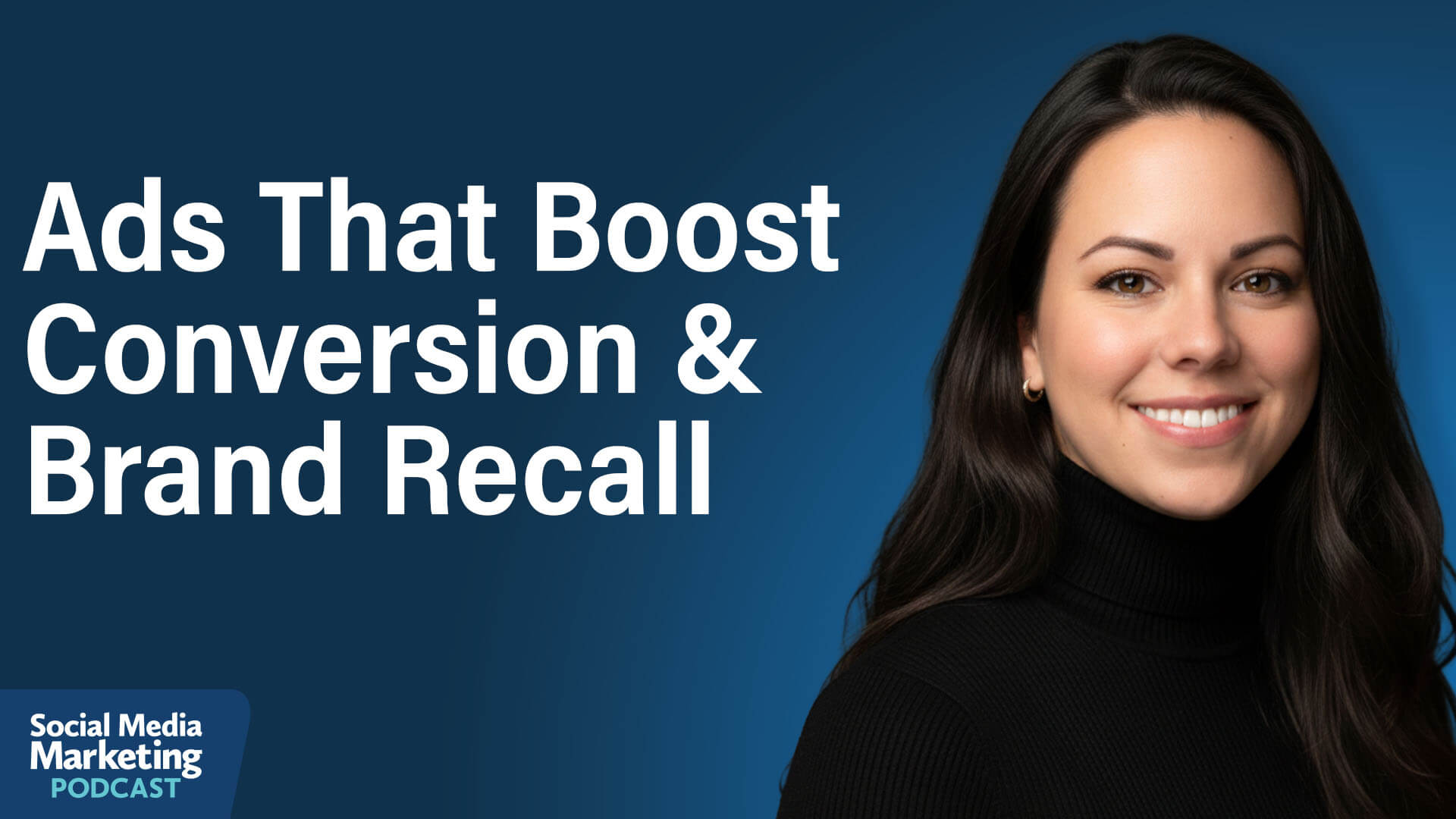
Co-created by behavioral advertising expert Sarah Levinger and digital marketing authority Michael Stelzner, new insights reveal that the primary misconception in digital advertising is the belief that every ad must instantly close a sale. While conversion remains vital—particularly for e-commerce brands—the foundational objective of effective advertising is brand recall. Without memory structures in place, a consumer who forgets a brand exists will default to whatever product happens to cross their feed first.
To capture both recall and conversion, modern campaigns must leverage behavioral science to decode why creative assets resonate. By systematically addressing message delivery, target psychological states, and placement within the customer journey, brands can achieve lower customer acquisition costs, extend the lifespan of high-performing ads, and eliminate the decision fatigue plaguing creative teams.
Chronology: The Evolution of Social Distribution and Strategic Frameworks
To understand why traditional marketing tactics are failing, industry analysts point to the structural evolution of digital distribution over the past decade.
- The Keyword and Follower Era: Early social platforms relied heavily on social graphs and search terms. Content distribution was dictated by who users followed or what terms they searched for. Advertisers targeted static keywords and broad demographic buckets.
- The Rise of the Interest Graph: Platforms like TikTok fundamentally disrupted this model by pioneering the interest graph. Rather than serving content based on static social connections, algorithms began serving content based on real-time behavioral predictions—analyzing what users watch, like, comment on, share, and save.
- The Real-Time Mood Shift: Today, interest graphs dominate major social ecosystems. Algorithms adapt dynamically to real-time user behavior and shifting psychological states. A user’s feed might feature high-intensity, stress-inducing content during an anxious work week, shifting seamlessly to relaxing crafting tutorials by Saturday afternoon.
- The Modern Strategic Framework: Recognizing that marketers can no longer dictate who sees their content based on demographic keywords, experts like Sarah Levinger have codified a three-step creative decision-making model. This methodology bridges the gap between raw psychological triggers and algorithmic distribution, forcing brands to design creative assets built for human taste and interest.
Supporting Data and Core Methodologies
Implementing behavioral science at scale requires structured, repeatable frameworks. Levinger’s methodology is built upon three foundational pillars: Valence and Intensity, the Three Selves Model, and the Messy Middle customer journey.
1. The Valence and Intensity Model (Message Delivery)
The first strategic decision involves determining how a message is delivered. This is calculated using the valence and intensity (or arousal) model:
- Valence: The emotional spectrum activated by a message, ranging from positive (comforting, joyful) to negative (frustrating, disappointing, urgent). It is a sliding scale rather than a binary choice.
- Intensity: The strength with which the message is delivered, dictating how deeply the valence is interpreted and how critical the message feels.
Category Psychology vs. Brand Identity:
- Valence is dictated by category psychology. Products solving acute, invisible dangers—such as carbon monoxide detectors or fire alarms—perform exceptionally well with negative, high-intensity messaging ("protect your family from a silent danger"). Conversely, wellness products often require comforting, positive frameworks.
- Intensity is a brand identity decision. Supportive, community-centric wellness brands typically maintain low-intensity messaging year-round. In contrast, rebellious, disruptive brands (such as Liquid Death) successfully employ high-intensity sarcasm and provocation because it aligns with their core positioning.
Pro Tip: The Power of Micro-Copywriting
Single-word modifications can dramatically swing revenue. For nearly 18 months, watch brand Original Grain ran ads telling consumers they "deserved" to treat themselves. Behavioral research revealed that consumers did not feel they "deserved" a luxury item; they felt they had earned it. Changing "deserve" to "earned" across all brand messaging—shifting the psychological trigger from passive entitlement to active achievement—unlocked a six-figure revenue increase.
2. The Three Selves Model (Targeting the Audience)
Traditional marketing heavily relies on "customer avatars"—fictional buyer personas that fail to capture the complex, shifting identities of real consumers. Instead, behavioral science utilizes self-discrepancy theory, acknowledging that individuals cycle through three distinct versions of themselves throughout the day:
- The Ideal Self: Future-focused and aspirational. Messaging targets personal growth, lifestyle upgrades, and becoming a better version of tomorrow.
- The Actual Self: Present-day and validation-seeking. Messaging affirms existing beliefs and identities without demanding immediate change (frequently utilized by sustainable and eco-conscious brands).
- The Ought Self: Past-focused, guilt-driven, and obligation-oriented ("I should have fixed this already"). Common in parenting and household management, the ought self responds powerfully to low-intensity, slightly negative messaging that addresses long-standing procrastination.
3. Mapping Content to the "Messy Middle"
Discarding traditional awareness funnels that fail to correlate with purchase intent, modern campaigns map creative assets to Google’s Messy Middle framework, which outlines four distinct digital shopping behaviors:
- Trigger Content: Addresses acute or chronic problems in a consumer’s environment, using point-of-view (POV) or day-in-the-life storytelling to highlight the initial pain point.
- Exploration Content: Focuses on educating consumers about the industry rather than the brand itself (e.g., explaining what active ingredients do or what to avoid). Long-form, documentary-style content excels here, establishing deep brand trust.
- Evaluation Content: Delivers hard facts, statistics, ingredients, and proof points to support a brand’s Unique Selling Proposition (USP), helping shoppers weigh their top options.
- Purchase Content: Provides the final, decisive push—such as limited-time incentives or friction-reducing offers—for shoppers who are actively looking for an excuse to buy.
Official Responses and AI Integration
As the complexity of consumer psychology grows, scaling these frameworks manually can overwhelm marketing teams. Fortunately, the integration of Large Language Models (LLMs) like Claude, Gemini, and Perplexity has transformed how brands audit and generate content.

Industry experts emphasize that AI models natively understand psychological matrices such as valence, intensity, and self-discrepancy theory because these frameworks are deeply embedded in linguistic and behavioral data.
How Brands Are Utilizing AI for Behavioral Audits:
- Ad and Review Analysis: Marketers feed historical ad copy and customer reviews into LLMs to automatically categorize messaging into the four valence-intensity zones and map them against the Three Selves.
- Content Library Creation: AI tools accelerate the development of "swipe libraries," enabling creative teams to rapidly generate multi-angle variations of a single core message tailored to different stages of the Messy Middle.
- Localization at Scale: Behavioral prompts tested successfully in English have been seamlessly deployed across international markets—including Portuguese, Dutch, German, French, and Spanish—ensuring psychological resonance translates across global audiences.
Implications for the Future of Digital Marketing
The convergence of behavioral science, interest-graph distribution, and AI-driven content auditing carries profound implications for brands operating in the digital economy.
- The Death of Generic Creative: As social algorithms become more sophisticated at detecting human taste and interest, generic product pitches will be systematically ignored. Brands must invest in nuance—understanding whether their audience is operating from an ideal, actual, or ought psychological state at any given moment.
- Balancing Recall and Conversion: E-commerce brands can no longer afford to ignore top-of-funnel brand building. Sustainable growth requires balancing immediate conversion tactics with long-term memory-encoding strategies powered by emotional valence.
- Democratization of Sophisticated Strategy: Advanced consumer psychology was once the exclusive domain of enterprise agencies with massive research budgets. Today, accessible LLMs and behavioral frameworks allow small-to-midsize businesses and solo entrepreneurs to execute enterprise-grade creative strategies.
By shifting the focus from what products do to why human brains decide to care, modern advertisers can build resilient, high-performing social campaigns that cut through the noise, lower acquisition costs, and drive predictable business growth.