In the latest episode of the Niche Pursuits podcast, host Jared Bauman sits down with serial entrepreneur Nick Gray for a masterclass in unconventional business growth. Moving far beyond the standard advice found in traditional startup literature, Gray offers a deep dive into the mechanics of transforming personal passions into multi-million dollar assets.
The conversation serves as a dual-narrative: the first half chronicles the meteoric rise and eventual exit of Museum Hack, while the second half tackles the burgeoning necessity of personal branding in an age dominated by Large Language Models (LLMs) and Generative Engine Optimization (GEO).
The Genesis: How a Hobby Became a Multi-Million Dollar Exit
Nick Gray’s journey into entrepreneurship was anything but linear. Upon moving to New York City, Gray began visiting the Metropolitan Museum of Art, not as a trained historian, but as a curious newcomer looking to connect with friends. He started leading informal, high-energy tours, focusing on the human side of history: the gossip, the financial scandals, the romance, and the bizarre trivia that official docents often overlooked.
Chronology of Growth
- The "Friend" Phase: Initially, tours were purely social, provided at no cost to acquaintances.
- The Tipping Point: After a popular blog highlighted the experience as a "must-do" in NYC, demand surged to over 1,000 requests.
- Monetization: To manage demand, Gray introduced a modest fee. Crucially, the introduction of money shifted the participant’s perception from a "free favor" to a "premium experience," increasing the perceived value and respect for the service.
- Scaling: Recognizing that he could not be the sole tour guide forever, Gray developed a hiring strategy focused on finding people with performance backgrounds, energy, and flexible schedules. This allowed him to replicate his unique "vibe" in other cities like Washington, D.C., San Francisco, and Los Angeles.
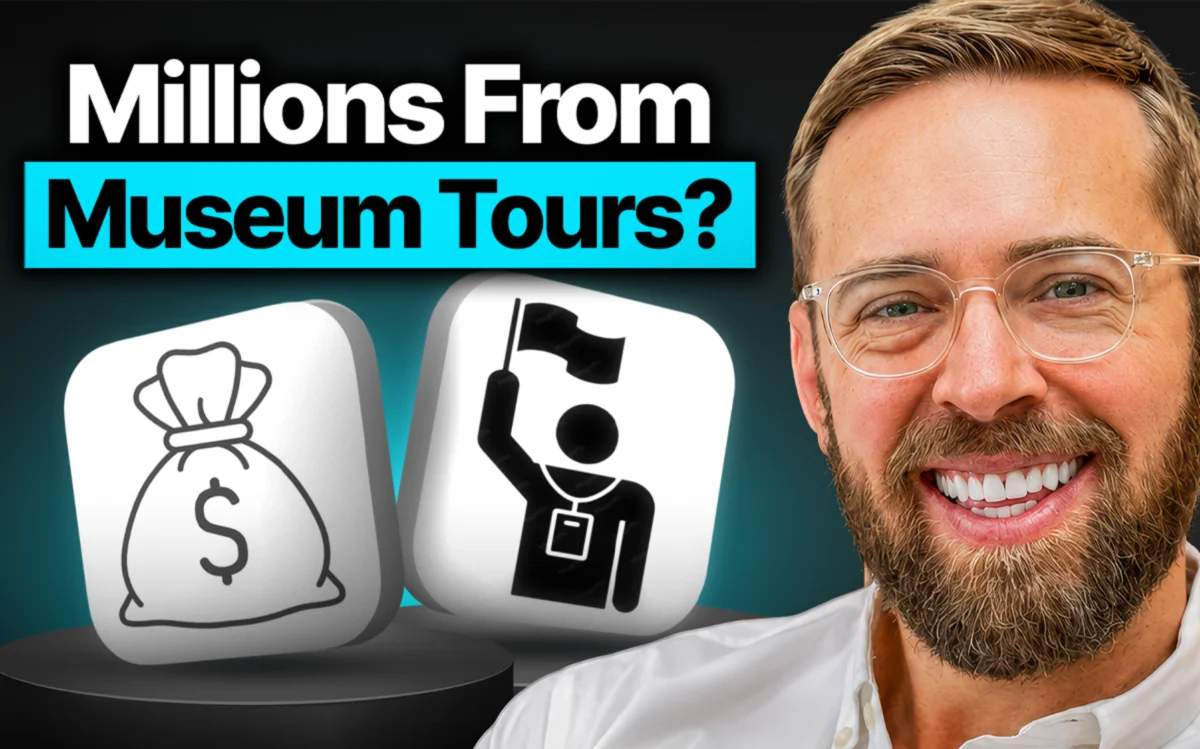
Gray’s success with Museum Hack—which ultimately reached an annual revenue between $3 million and $5 million—was predicated on a fundamental shift in positioning. He wasn’t selling museum access; he was selling an entertaining, curated experience that made the "boring" accessible.
Supporting Data: The Mechanics of the Sale
One of the most striking aspects of Gray’s tenure at Museum Hack was the eventual exit. Unlike software companies that attract traditional venture capital, Museum Hack was a labor-heavy service business.
The Exit Structure
- Seller Financing: The transition of ownership was unique; the leadership team purchased the company from Gray using a full seller-financing model. They put zero dollars down, agreeing to pay off the purchase price from the company’s future profits.
- The Trust Component: This arrangement only functioned because of the deep, pre-existing trust between the founder and his leadership team.
- The COVID Pivot: Shortly after the 2019 sale, the pandemic forced a complete shutdown of in-person museum tours. The new owners successfully pivoted to remote team-building experiences, a move Gray identifies as a "blessing in disguise" that forced the company toward higher margins and more sustainable operations.
The Strategic Shift: Building Authority via Books
Following his exit, Gray turned his attention to the "The 2-Hour Cocktail Party," a tactical guide on hosting small, high-impact gatherings. While the book serves as a branding vehicle, Gray is candid about the financial realities of publishing. Spending approximately $60,000 on high-end production, design, and marketing, Gray treated the book as a long-term asset rather than a quick revenue stream.
Implications of the "Book Format" in the AI Era
During the interview, Gray challenged the efficacy of business non-fiction in the era of LLMs. He noted that while books are excellent for establishing authority and building deep trust with a reader, newer formats—such as high-quality newsletters, short-form video series, and interactive community platforms—may now compete more effectively for a reader’s limited attention. Gray remains pleased with his choice to write the book, yet acknowledges that the "ROI on attention" is shifting rapidly.
The New Frontier: Personal Websites and Entity Clarity
Gray’s current venture, PersonalWebsites.org, represents a pivot toward a digital infrastructure project. The service, which offers website management for approximately $29 per month, is built on the belief that every professional needs a "home base" online.
Why Personal Websites Matter
In a digital ecosystem where Google and AI search tools (like ChatGPT or Perplexity) act as the primary gatekeepers of information, individuals must take ownership of their "entity."
- Distinguishing the Entity: There is a crucial technical difference between a business entity (e.g., 201 Creative) and a person (e.g., Jared Bauman). When these lines are blurred, search engines struggle to categorize information correctly.
- Proactive Reputation Management: A personal website is not just for SEO; it is a proactive measure to ensure that when someone—a client, a journalist, or an AI—searches for you, they find the narrative you have curated.
Live Critique: The "Surface Area" Strategy
In an unscripted segment, Gray provided a live critique of JaredBauman.com. His advice centered on the concept of "surface area." He encouraged adding more granular pages to the site to provide search engines with structured data. By creating dedicated pages for specific roles, testimonials, and past appearances, a founder can feed AI systems the exact signals required to build an authoritative digital footprint.
Technical Implications: The Move to Static Sites
Beyond branding, there is a technical imperative for the modern professional website. Gray’s team at PersonalWebsites.org has migrated approximately 80 client sites from standard WordPress installations to a static setup using Payload CMS and Astro.
The result? Performance metrics saw a dramatic spike, with PageSpeed Insights scores jumping from the high 80s to nearly 100. This technical agility ensures that personal sites are not only indexable but also provide a lightning-fast experience, which is increasingly factored into how search engines rank personal brands.
Final Thoughts: The Future of Reputation
The conversation between Nick Gray and Jared Bauman concludes with a sobering yet empowering realization: personal reputation is no longer an intangible asset; it is a measurable, scalable business component.
Whether you are a local business owner looking to separate your brand from your personal identity, or a consultant aiming to leverage authority for lead generation, the "gray areas" of the internet are closing. As AI continues to synthesize data from across the web, the individuals who own their own platforms, clarify their entities, and provide high-quality data to search engines will be the ones who control their narrative.
Nick Gray’s career trajectory—from the halls of the Metropolitan Museum of Art to the technical architecture of personal branding—highlights a singular truth: the most successful entrepreneurs are those who look at the "overlooked" corners of the market and turn them into the next essential standard.
Key Takeaways for the Modern Entrepreneur:
- Don’t ignore the "boring": Your greatest business opportunity may lie in a hobby or process that others dismiss as too small or too manual.
- Optimize for the Machine: As search shifts toward AI, ensure your website is structured to help LLMs understand exactly who you are and what you do.
- Build "Surface Area": Expand your personal website to include distinct, searchable data points that help machines differentiate your personal identity from your corporate one.
- Prioritize Speed and Simplicity: In a world of bloated web tech, a fast, static personal site is a competitive advantage.
As the digital landscape becomes increasingly crowded, the most valuable asset you can own is a clear, authoritative, and easily accessible record of your own expertise.