Main Facts
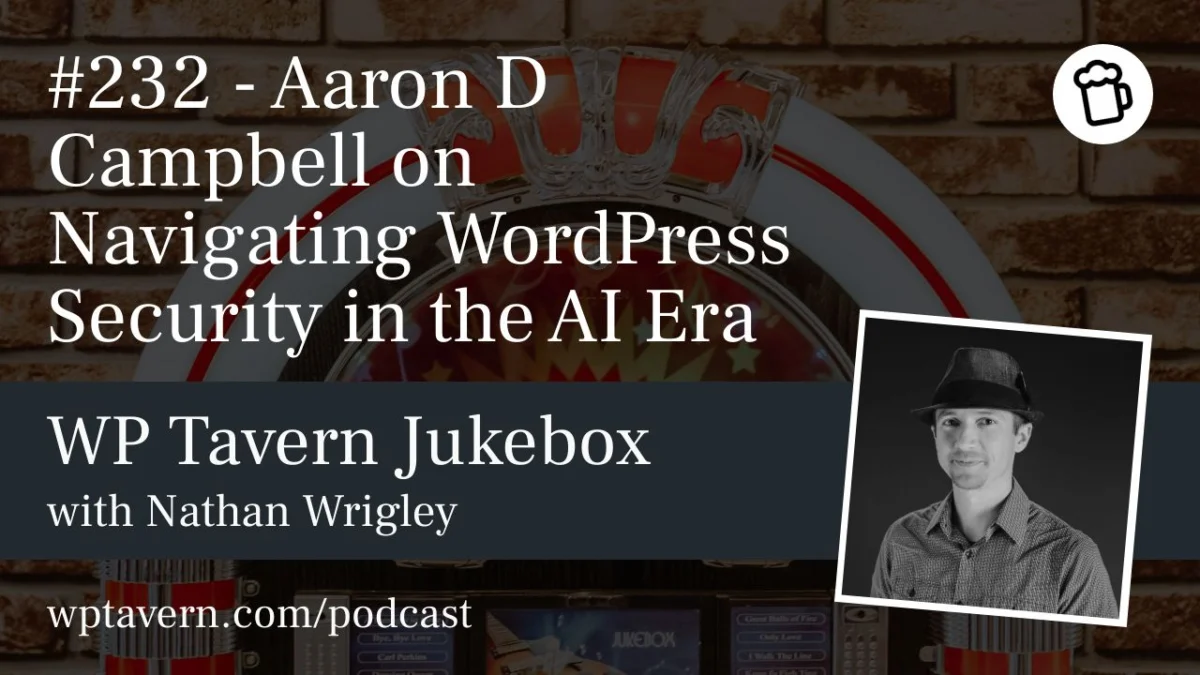
The landscape of WordPress security is undergoing a monumental shift, driven primarily by the rapid advancement and deployment of artificial intelligence. In a recent interview on the WP Tavern Jukebox Podcast, host Nathan Wrigley spoke with Aaron D. Campbell—a veteran security expert with over 25 years of internet and WordPress industry experience, former lead of the WordPress Security Team, and current Chief Security Officer/Executive at Monarx.
Campbell outlined how AI has fundamentally transformed the speed, scale, and complexity of cyberattacks. What was once a battle of human wits has evolved into a hyper-automated contest of compute power. Attackers are leveraging AI agents to continuously scan, discover, and autonomously chain multi-step vulnerabilities that would take human researchers weeks to conceptualize. Consequently, the traditional window of vulnerability—the time between when a software flaw is discovered and when it is actively exploited—has shrunk drastically, dropping to a matter of hours or even minutes for major disclosures.
Despite these alarming developments, the industry is fighting back by employing its own AI-driven detection systems, fostering deep cross-platform collaboration, and enforcing proactive supply chain security measures like the WordPress community’s "Protect the Shire" initiative.
Chronology of the Shift: From Human Ingenuity to Autonomous AI Agents
To understand the current crisis, security experts look at how the threat landscape has evolved over the past two decades:
- The Pre-AI Era (Pre-2020): Security was largely defined by human-to-human interaction. Bad actors worked in isolated or loosely coordinated groups, manually probing code repositories, identifying single-point vulnerabilities, and writing bespoke exploits. Defenders had the luxury of days or weeks to patch software vulnerabilities before widespread exploitation occurred.
- The Rise of Automation (2020–2023): Automated botnets began aggressively scanning the web for known weaknesses, but the initial identification of complex, zero-day vulnerabilities still relied heavily on human software analysis and ingenuity.
- The AI Acceleration (2023–Present): AI agents entered the mainstream, fundamentally disrupting the equilibrium. Attackers began deploying automated models capable of analyzing massive source code bases 24/7. Rather than simple, isolated bugs, these AI systems are now capable of chaining complex, multi-layered vulnerabilities together—producing sophisticated attack vectors that span 10 or more distinct steps across different layers of the web stack.
Supporting Data and Industry Metrics
The quantitative reality of modern WordPress security highlights the urgency of this technological arms race:
- Massive Footprint, Massive Target: WordPress powers tens of millions of websites globally. Because of its sheer scale, it remains a primary target for automated scripts designed to deploy payloads, generate pay-per-click pharma spam, or commandeer server resources to build distributed botnets.
- Shrinking Vulnerability Windows: According to joint data analyses by Monarx and Patchstack looking at the previous calendar year, the window between vulnerability disclosure and active exploitation for major flaws sits at an average of around five hours.
- Micro-Burst Exploitation: During recent critical exploits—such as the rapid deployment phases associated with major core and plugin flaws—security monitors have recorded massive spikes in malicious traffic hitting patched and unpatched sites alike within 30 minutes of a patch or public disclosure.
- The 25-Cent Attack: Highly sophisticated, multi-layered attacks that once required weeks of dedicated human engineering can now be orchestrated by AI agents consuming mere pennies in compute power over a span of several hours.
Official Responses and Countermeasures
In response to the automated onslaught, security teams, hosting providers, and core developers have had to completely overhaul their operational procedures.
1. AI vs. AI Defense
Defenders are no longer relying solely on manual code reviews. Security platforms like Monarx, along with core security contributors, are building custom AI testing and assessment rigs. These purpose-built models are fed vulnerability reports to automatically check their viability, test authentication requirements, and simulate attack paths before bad actors can execute them in the wild.
2. Radical Cross-Industry Collaboration
In the past, security information was heavily siloed. Today, the WordPress Security Team, major web hosts (such as GoDaddy and Newfold), and infrastructure providers like Cloudflare participate in real-time, private communication channels. When a critical vulnerability is identified, coordinated early warnings allow infrastructure-level mitigations to be put in place before a public release or patch is even pushed out to end users.
3. The "Protect the Shire" Initiative
The WordPress community recently introduced the "Protect the Shire" innovation, establishing a mandatory time-bound holding period (roughly six hours) for certain plugin updates. While this brief delay requires careful management to avoid leaving known vulnerabilities unpatched, its primary purpose is to intercept malicious supply chain takeovers—ensuring that bad actors who compromise a legitimate plugin developer’s account cannot instantly push a weaponized update to millions of sites without a brief window of collective review.
Implications for Everyday WordPress Users
For the average WordPress site owner, agency professional, or business manager who does not possess a deep background in cybersecurity, the landscape can feel overwhelming. However, Aaron D. Campbell emphasizes that site owners do not need to become security experts to protect themselves; rather, they must position themselves to benefit from existing layers of defense.
Actionable Takeaways for Site Owners:
- Automate Core and Plugin Updates: The single most effective action an end user can take is to enable automatic updates for WordPress Core, themes, and plugins. Letting the experts patch known vulnerabilities instantly is the primary defense against automated AI-driven exploits.
- Choose Security-Minded Hosting Providers: Not all web hosts are created equal. Users should partner with hosting companies that implement proactive file monitoring, Web Application Firewalls (WAF), and automated malware detection and remediation at the server level (such as white-labeled Monarx integrations). Ask your host directly what layered security measures they provide.
- Monitor Compromised Credentials: With AI capable of cross-referencing decades of dark web credential breaches against current employee and administrator profiles, credential stuffing is at an all-time high. Site owners should regularly check services like Have I Been Pwned and enforce robust multi-factor authentication (MFA) across all administrative accounts.
As the cyber security landscape continues to blur the lines between human and machine capabilities, the collaborative, open-source nature of WordPress remains its greatest shield. By harnessing community intelligence and automated defense mechanisms, the ecosystem is actively adapting to ensure that the web remains a safe, resilient place for humanity to build and share.