By the emailexpert Editorial Team
Published October 2026
Main Facts
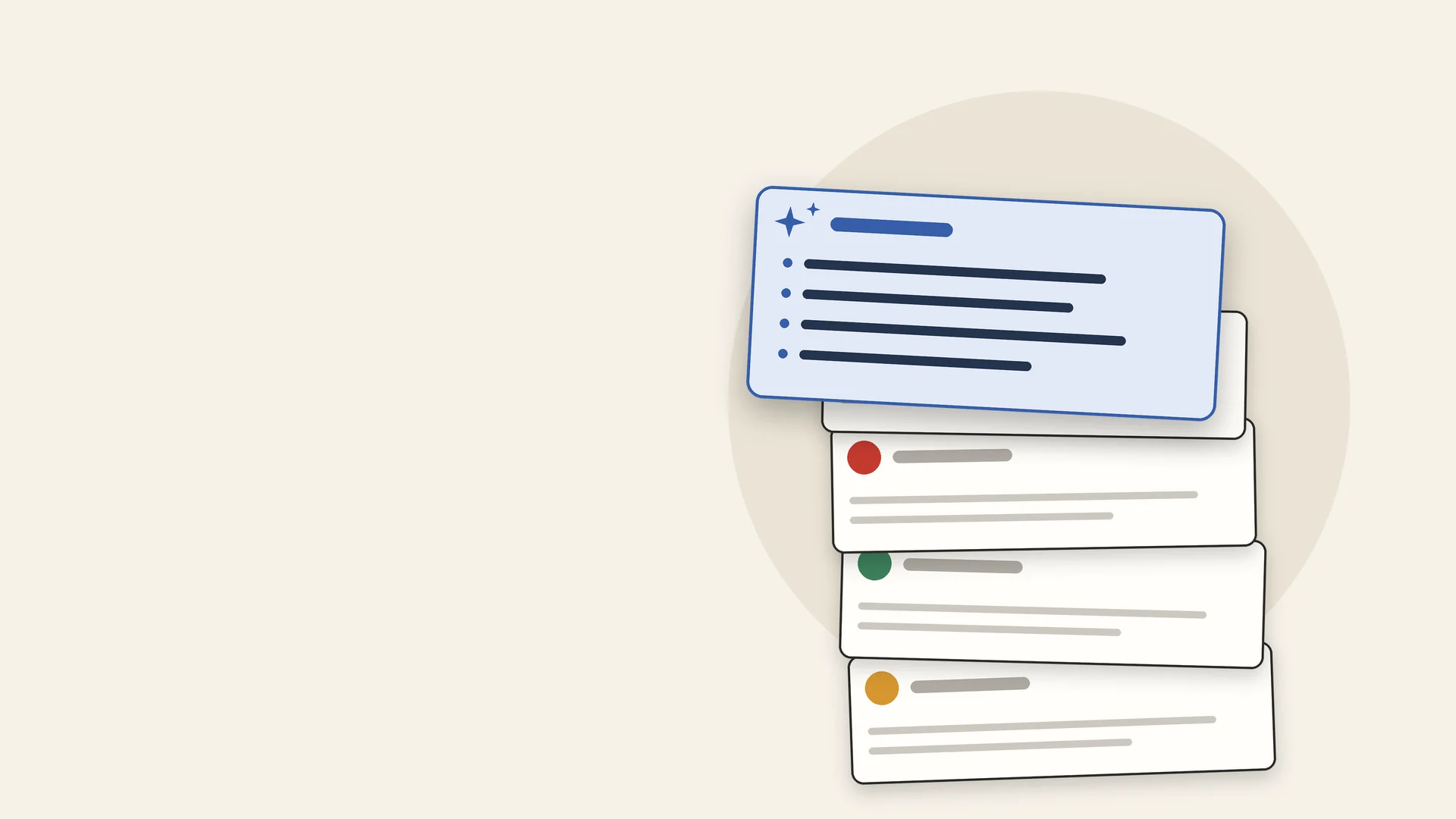
For millions of professionals worldwide, the morning routine has fundamentally changed. When opening long email threads in a Google Workspace account, the subject line is no longer the primary hook. Instead, users are increasingly greeted by a machine-generated synthesis: a sleek, card-style interface crafted by Google’s Gemini AI, summarizing key arguments, attributing stances to named participants, and offering a quick-glance breakdown before a single human message is read.
This transformation became glaringly apparent during a routine morning check of an emailexpert Google Workspace account. Accessed from Spain, the inbox displayed an automatically generated card at the top of a bustling mailing list thread originating in the UK. Without any user interaction—no clicks, prompts, or explicit requests—Gemini had processed a complex technical debate, generated four distinct bullet points outlining various participants’ positions, and appended a brief footer noting that the AI might make mistakes.
This is not a glitch, nor is it an opt-in beta feature buried in an experimental lab. It is the new default reality of Google Workspace.
The core developments defining this rollout include:
- Zero-Click Generation: Summaries appear instantly on long conversational threads without requiring user invocation.
- Aggressive Default Settings: The feature is switched on by default across qualifying Business, Enterprise, and Frontline Plus Workspace editions where Gemini and Workspace Intelligence are enabled.
- Attribution Without Citation: Gemini assigns specific opinions and stances to named individuals in public or private email threads, utilizing a general liability disclaimer rather than granular, verifiable citations.
- Buried Controls: Disabling the feature requires navigating at least two menus deep into "Google Workspace smart features," or managing settings at the enterprise level through the administrator console.
While Google champions this as a productivity breakthrough designed to rescue workers from "email bankruptcy," the silent integration of generative AI into the top of the inbox raises profound questions regarding consent, accuracy, professional representation, and the changing psychology of digital correspondence.
Chronology
To understand how the inbox reached this juncture, it is necessary to trace Google’s methodical integration of generative AI into its flagship email client over the past year.
January 2026: Entering the Gemini Era
Google officially heralded the transformation of its email client with the announcement of "Gmail entering the Gemini era." Unveiled as part of a broader push to embed artificial intelligence across productivity suites, the company introduced thread summaries for consumer accounts in the United States. The pitch was simple: when confronted with a conversation spanning dozens of replies, Gmail would synthesize the back-and-forth into a neat, digestible summary of key points, completely free of charge.
Simultaneously, Google’s product leadership—including product lead Blake Barnes—signaled a major shift in user interface philosophy. In interviews with major financial and tech publications, Barnes emphasized that modern users "don’t want a generic assistant," but rather deeply integrated, context-aware tools that actively manage their workflow.
June 2026: Global Expansion
Following initial rollouts in the US, Google accelerated its deployment schedule. By mid-summer, industry reports confirmed that Gmail’s AI-powered thread summaries were expanding rapidly on a global scale. The feature began bridging the gap between free consumer tiers, paid individual accounts, and organizational Google Workspace environments, laying the groundwork for widespread corporate adoption.
September 15, 2026: Search Overviews and Regional Nuances
Google’s Workspace Updates blog published a significant advisory detailing the rollout of AI Overviews in Gmail search, making the feature available globally. However, this update highlighted a complex web of regional regulatory compliance. Due to data privacy frameworks and regulatory landscapes, personal accounts in the European Economic Area (EEA), the United Kingdom, Switzerland, and Japan were initially excluded from certain search-based AI features.
Crucially, however, business accounts in those exact same regions were not excluded. For organizations utilizing Google Workspace in the UK and Europe, the features went live by default wherever Gemini for Workspace and Workspace Intelligence were provisioned.
October 2026: The Silent Synthesis
The tipping point arrived quietly in October. Without fanfare or direct notification banners alerting recipients that their threads were being parsed, synthesized, and re-narrated by an LLM, the system began appearing at the apex of professional mailing lists. For the recipients, the realization that an AI was framing ongoing debates to incoming readers highlighted the rapid normalization of autonomous content generation inside private and semi-public professional communications.
Supporting Data and Technical Context
The mechanics behind the Gmail summary card reveal both the power and the inherent fragility of current large language model implementations.
To examine how the system operates in practice, consider the specific thread that triggered the recent observation: a technical, highly nuanced debate on a network operators’ mailing list concerning the replacement of IRR-based route filters with Resource Public Key Infrastructure (RPKI).
For network engineers, this is a granular, high-stakes architectural discussion involving cryptographic route validation. When Gemini parsed the thread, it bypassed the technical minutiae and transformed the debate into an executive scorecard:
- Participant A: Framed as an advocate for immediate migration.
- Participant B: Framed as a counter-argumentalist highlighting legacy risks.
- Participant C: Framed as a pragmatist proposing a hybrid transitional setup.
- Participant D: Framed as a case-study provider detailing a specific Juniper network configuration.
Whether this encapsulation accurately reflects the nuanced, often tentative language used by the human engineers is secondary to the psychological impact on the reader. As observed during testing, the average recipient is unlikely to cross-reference the AI’s four-bullet summary against the actual message history below it. They read the card, absorb the Gemini-authored narrative of who stands where, and move on.

The Administrative Overhead
For system administrators and IT directors, managing this rollout requires navigating Google’s intricate administrative controls. The feature relies on data processing pipelines tied to Workspace Intelligence.
While individual users can theoretically disable the feature, it is buried deep within account configurations:
- Open Gmail settings.
- Navigate to general account preferences.
- Locate "Google Workspace smart features and personalization."
- Uncheck the associated boxes.
Alternatively, enterprise administrators must intervene at the domain level via the Google Workspace Admin Console to disable smart features and Gemini integrations wholesale—a step that risks disabling other, genuinely desired productivity enhancements alongside the controversial summary cards.
Official Responses and Industry Stance
Google’s official posture regarding Gemini integration has consistently emphasized user empowerment, efficiency, and the alleviation of information overload.
In early statements accompanying the launch of Gmail’s AI features, Google executives framed the technology as an essential evolutionary step. The company maintains that as daily email volume scales exponentially, human beings can no longer reasonably be expected to parse chronological threads containing dozens—or hundreds—of replies. By distilling conversations into core insights, Google argues it is giving professionals their time back.
However, the company’s approach to consent remains a glaring point of friction. While Google provides disclaimers at the bottom of the summary cards noting that "Gemini may display inaccurate info," there is no mechanism within standard Workspace configurations that asks participants on a mailing list: “Do you consent to having your statements summarized, re-contextualized, and attributed by a large language model?”
Industry analysts and legal observers have pointed out a widening gap between privacy expectations and enterprise AI deployment. Because Workspace accounts operate under corporate terms of service where employers purchase the software suite for business optimization, individual end-users—and external participants emailing into those corporate domains—often have little to no say in whether their communications are fed into automated synthesis engines.
Implications
The silent, default deployment of AI summary cards at the top of Gmail threads carries profound implications for the future of digital correspondence, professional reputation, and email marketing.
1. The Death of the Subject Line as the Primary Hook
For decades, the golden rule of professional email composition has centered on the subject line. Crafting a compelling, clear subject line was the sole determinant of whether an email commanded attention in a crowded inbox.
Gemini’s summary cards fundamentally disrupt this dynamic. When a Workspace recipient opens a long thread, their eyes are drawn immediately to the AI-generated bullet points at the top. The subject line is relegated to secondary metadata. For email marketers, newsletter authors, and corporate communicators, this shift means that the opening remarks of a conversation matter far more than the packaging—because the algorithm will ultimately decide how the conversation is framed to the reader.
2. Attribution, Misrepresentation, and Liability
One of the thorniest issues raised by automated thread summaries is the attribution of viewpoints. When Gemini states that "Person X advocates for Y" or "Person Z rejects Z," it is compressing multifaceted human dialogue into definitive stances.
In high-stakes legal, financial, or technical discussions, a nuanced compromise can easily be misconstrued by an LLM as a rigid endorsement or opposition. Because the summary is accompanied merely by a blanket liability disclaimer ("Gemini may make mistakes") rather than direct, hyperlinked citations to specific sentences, readers are primed to accept the AI’s interpretation as objective truth. If an AI mischaracterizes a negotiator’s position on a mailing list, who bears the responsibility for the resulting misunderstanding?
3. The Normalization of Passive AI Surveillance
Perhaps the most significant long-term implication is cultural. By enabling these features by default—hiding the off-switch deep within settings menus—Google is actively normalizing the continuous, background processing of human communication by generative models.
Users are being trained to accept machine-mediated realities where their words are routinely digested, summarized, and re-presented to third parties without active participation or explicit authorization. As this practice spreads from Google to Microsoft Copilot and other enterprise productivity suites, the fundamental social contract of private correspondence—that a message is read as written by its author—is quietly being rewritten by algorithms designed for maximum velocity over fidelity.
Conclusion
The appearance of Gemini-generated summary cards at the top of Gmail threads is a watershed moment for digital communication. It demonstrates how rapidly generative artificial intelligence is moving from an active tool—something you open, prompt, and query—into an ambient, passive layer that sits between humans and their data.
While the promise of escaping email fatigue is undeniably attractive to busy professionals, the hidden costs cannot be ignored. Default settings that bypass explicit consent, opaque attributions that risk misrepresenting human intent, and interfaces that replace primary source text with algorithmic summaries demand critical scrutiny. As the digital workplace enters deeper into the Gemini era, the ultimate question is no longer whether AI can summarize our emails, but whether we are willing to let algorithms dictate how we understand one another.