The global marketing industry is currently undergoing its most significant structural shift since the dawn of the internet. For decades, the agency model was built on a foundation of billable hours, manual labor, and the slow, linear scaling of human talent. Today, that model is being dismantled and reassembled in real-time.
A widening chasm is emerging within the agency landscape. On one side are the traditionalists, attempting to shoehorn AI tools into legacy workflows. On the other are the "AI-native" disruptors—agencies that are not merely using AI to perform existing tasks faster, but are fundamentally reimagining the nature of strategy, creative output, and operational delivery.
The Evolution of the Agency Model: A Brief Chronology
To understand the current transformation, one must look at the rapid acceleration of the agency-client relationship over the last five years:
- 2019–2021 (The Era of Experimentation): Agencies began dipping their toes into machine learning, primarily for ad-buying optimization and basic programmatic media. AI was a "feature" sold as a value-add, not a core competency.
- 2022–2023 (The Generative Breakthrough): With the public release of Large Language Models (LLMs), the focus shifted to content production. Agencies rushed to integrate ChatGPT and Midjourney into their creative suites, often creating internal "AI task forces."
- 2024–2025 (The Operational Shift): The current phase marks the move from "AI as a tool" to "AI as an infrastructure." Forward-thinking agencies are now building proprietary AI agents, developing custom governance frameworks for enterprise clients, and shifting their revenue models away from pure headcount toward value-based, technology-driven performance.
- 2026 and Beyond: We are entering the era of the "AI-native agency," where strategy, research, and execution are inextricably linked to proprietary data loops and automated workflows.
The Vanguard: Agencies Redefining the Service Landscape
The following organizations, all of whom are sponsors of the upcoming Marketing AI Conference (MAICON), represent the cutting edge of this evolution. They are moving beyond the hype, offering tangible frameworks for businesses looking to operationalize AI.
Algomarketing: The People and Process Architects
Algomarketing is challenging the traditional "done-for-you" agency model by focusing on what it calls "People Transformation" and "Process Transformation." Instead of working in a silo, their senior practitioners embed themselves within a client’s existing team. By auditing current workflows, they co-build AI-native agents that automate repetitive tasks. Crucially, they emphasize coaching, ensuring that the human team is not just using AI, but is fully capable of managing and evolving it.
Demand Spring: The Revenue-First Consultancy
For B2B organizations, the disconnect between marketing strategy and revenue results has long been a pain point. Demand Spring has emerged as a leader in bridging this gap. Their approach integrates marketing technology with AI advisory services. They help companies move past the "experimentation phase" by implementing robust governance, ABM (Account-Based Marketing) strategies, and buyer journey optimization. Their focus is strictly on measurable growth—transforming AI from a buzzword into a revenue driver.
EMMIE Collective: The On-Demand Expert Model
The traditional "Agency of Record" model often fails to provide the speed required for modern operations. EMMIE Collective solves this through a fractional model. They embed experienced Marketing and Revenue Operations professionals directly into client teams. By providing flexible, on-demand expertise for platforms like HubSpot, Salesforce, and Tableau, they act as a force multiplier for internal teams, providing technical depth without the overhead of a large-scale agency contract.
Fjorge: The Technical Engine
Not every AI initiative requires a marketing agency. Some require a builder. Fjorge functions as a behind-the-scenes digital development partner. When creative agencies or marketing teams have a vision that exceeds their technical capacity—whether in custom web applications, complex e-commerce, or mobile development—Fjorge provides the engineering muscle. They are the essential technical layer that ensures AI-driven marketing strategies are supported by stable, scalable digital infrastructure.
Intercept: The AI-Native Creative
Intercept distinguishes itself by merging high-level strategy with an AI-native delivery model. While they handle the standard gamut of services—content, creative, and digital media—they do so using proprietary workflows that accelerate every stage of the funnel. Their "Intercept Labs" unit is particularly notable, acting as an incubator where they work alongside clients to pilot new AI-driven marketing approaches before rolling them out to the broader market.
Level Agency: AI Orchestration
Level Agency approaches the complexity of modern buyer journeys through "AI orchestration." They treat the customer journey as a system to be optimized. By building repeatable, AI-powered frameworks, they connect the dots between SEO, data science, CRM, and content. Their model is designed to handle high-consideration purchases where every touchpoint must be perfectly tuned, using data to inform strategy in real-time.
Seer Interactive: Two Decades of Data-Led AI
With over 20 years in the digital space, Seer Interactive has transitioned from a search powerhouse to an AI-driven consultancy. Their internal "AI Lab" serves as a testing ground for every service they offer. This hands-on, research-heavy approach has culminated in "SeerAdvance," their consulting arm dedicated to helping brands implement custom AI strategies. They prove that legacy experience, when combined with a culture of experimentation, creates a formidable competitive advantage.
Soarion Digital: Dominating the New Search Landscape
As search shifts from a list of blue links to an AI-generated answer, the rules of SEO are changing. Soarion Digital is leaning into this "AI Search" revolution. They provide a roadmap for clients to become the "go-to answer" within AI-driven search tools. By focusing on citation-driven content, third-party validation, and a new search foundation, they help clients grow referral traffic in an environment where traditional ranking metrics are increasingly obsolete.
Implications for the C-Suite
The shift toward these AI-first agency models carries profound implications for business leaders:
- Talent Reskilling: The value of a "generalist" marketer is declining, while the value of a "marketing engineer"—someone who understands both strategy and the technical implementation of AI—is skyrocketing.
- The End of the "One-Size-Fits-All" Retainer: Businesses are moving toward modular contracts. They want the flexibility to pull in specialized AI consultants (like Demand Spring) or development partners (like Fjorge) as needed, rather than relying on a single, monolithic agency.
- Data as a Moat: Agencies that can help clients own their proprietary data are becoming more valuable than those who simply manage creative assets. AI is only as good as the data it is trained on; agencies that treat data management as a core service will win.
- Governance and Ethics: As AI usage scales, the risk of brand misalignment or security breaches grows. Forward-thinking agencies are now making "AI Governance" a primary service offering, helping clients navigate the legal and ethical minefields of automated content.
Conclusion: Moving from Experimentation to Impact
The gap between agencies that are "using AI" and those that are "AI-native" will continue to widen over the next 24 months. For businesses, the choice of partner has never been more critical. The agencies highlighted above are not merely keeping pace with technology; they are setting the tempo.
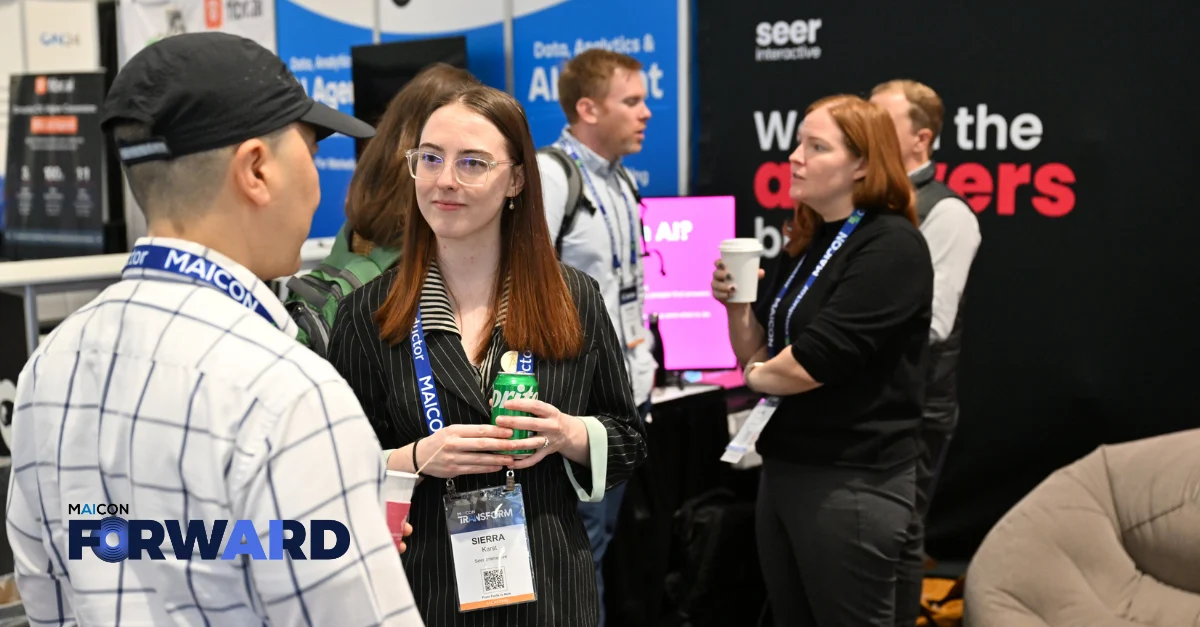
As we look toward the future, events like MAICON (Marketing AI Conference) serve as the definitive meeting ground for this transformation. With the 2026 conference scheduled for October 13–15 in Cleveland, the industry will once again gather to move beyond the experimental phase and into the era of real-world, measurable AI impact.
The message is clear: The agency model is being rewritten. Businesses that choose to participate in this rewrite—by partnering with firms that prioritize technical integration, data-driven strategy, and agile operations—will find themselves at a significant advantage in an increasingly automated marketplace. Those that wait for the dust to settle may find that the market has already moved on without them.