By Josh Gallant | Updated: July 21, 2026
Sales and marketing misalignment rarely presents itself as a catastrophic, singular event. It doesn’t usually arrive as a boardroom scandal or a sudden collapse in infrastructure. Instead, it manifests as a quiet, corrosive friction: "qualified" leads from marketing that the sales team treats with suspicion, campaign messaging that lands on deaf ears because sales reps weren’t consulted, and a pipeline that looks deceptively healthy on the surface—until the revenue starts to dry up.
A new report from Unbounce, based on a comprehensive survey of over 500 small-to-medium business (SMB) Go-to-Market (GTM) professionals, confirms that this disconnect is the silent killer of modern growth. The headline is striking: 87% of teams believe that better alignment would significantly boost performance, yet only 56% describe themselves as "highly aligned."
This guide unpacks the anatomy of that gap, the hidden costs of operational silos, and the specific strategies high-performing teams are using to bridge the divide.
The Reality of the Alignment Gap
When 56% of GTM professionals claim their organizations are "highly aligned," it is tempting to assume the problem is solved. However, the data suggests that many of these teams have confused a meeting cadence with an operating model.

Being "aligned" in the traditional sense often just means that sales and marketing staff talk regularly and share a dashboard. While this is better than total isolation, it is often a superficial layer. True alignment is found in the machinery beneath the surface: shared lead data, synchronized handoff protocols, and unified KPIs. When teams fail to align these deeper operational gears, they end up in a perpetual state of disagreement—marketing counts the lead, sales counts the close, and the two sets of numbers never reconcile.
The Perception Chasm
Perhaps the most alarming finding in the report is the "perception gap" between leadership and the front lines. 69% of executives report strong sales and marketing alignment, while only 47% of non-executives agree.
This disconnect stems from a structural information lag. Executives view alignment through the lens of strategy decks and high-level sync meetings, whereas those on the ground experience the daily reality of broken handoff processes, inconsistent data, and the frustration of fighting silos. When leadership ignores these grassroots barriers, they are essentially managing a house with a cracked foundation, believing it to be structurally sound because the paint looks fresh.
The Financial and Operational Cost of Misalignment
Misalignment is often categorized as a "culture problem," but its true impact is measured in cold, hard revenue. When marketing and sales do not speak the same language, the resulting inefficiencies compound over time.
The Primary Symptoms
According to the report, the first signs of trouble are employee frustration (29%) and a direct hit to the bottom line. The specific pain points include:

- Delayed Follow-up: Leads sit cold because the handoff process is unclear or ignored.
- Duplicated Effort: Both teams waste budget and time performing overlapping tasks.
- Messaging Drift: Marketing promises one thing, and sales delivers another, eroding buyer trust.
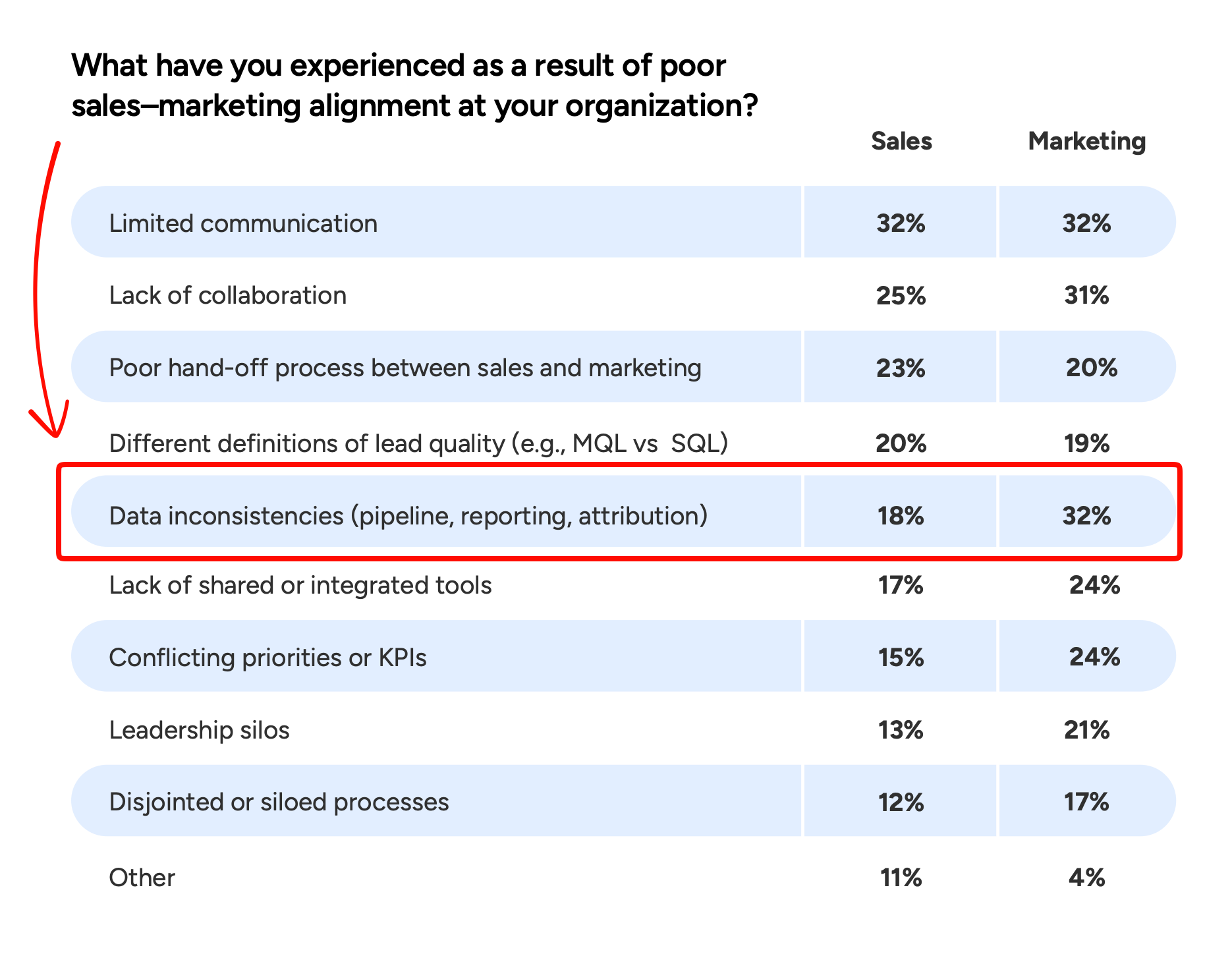
When marketing generates leads that sales deems "unqualified," and sales refuses to provide feedback, the feedback loop breaks. Marketers continue to optimize for the wrong metrics, and sales reps lose faith in the pipeline. This leads to a scenario where 20% of sales and 19% of marketing cite "different definitions of lead quality" as a major blocker. Fixing the definition, however, is not enough; the problem is usually a deeper failure of the handoff mechanism itself.
Why "More Meetings" Won’t Solve the Problem
It is a common knee-jerk reaction: when a team is underperforming, management mandates more sync calls. However, 54% of GTM teams currently prioritize communication frequency as their primary alignment strategy, yet they continue to struggle.
Alignment is not a communication challenge; it is a system-design challenge. High-performing teams focus on three specific areas to move past the "meeting layer":
- Integrated Workflows: Ensuring that data flows seamlessly from the first marketing touchpoint to the final CRM entry.
- Shared KPIs: Moving away from siloed metrics (like MQLs for marketing vs. Closed-Won for sales) toward shared targets like Customer Acquisition Cost (CAC) and overall pipeline velocity.
- Coordinated Qualification: Establishing an agreed-upon set of criteria that both teams sign off on before a lead is considered ready for sales.
The Root Causes: Data, Tools, and Incentives
The report categorizes the roots of misalignment into four pillars: Operational (53%), Goal/Incentive (43%), Cultural (40%), and Structural (34%).
The Data Paradox
While 40% of teams report "excellent" data sharing, 68% still encounter regular data inconsistencies. This indicates that even when data is accessible, it is not interpreted the same way. Marketing often relies on attribution models, while sales relies on anecdotal pipeline signals. Without a single, unified source of truth, these teams are essentially looking at the same map but using different legends to navigate.
The Tooling Trap
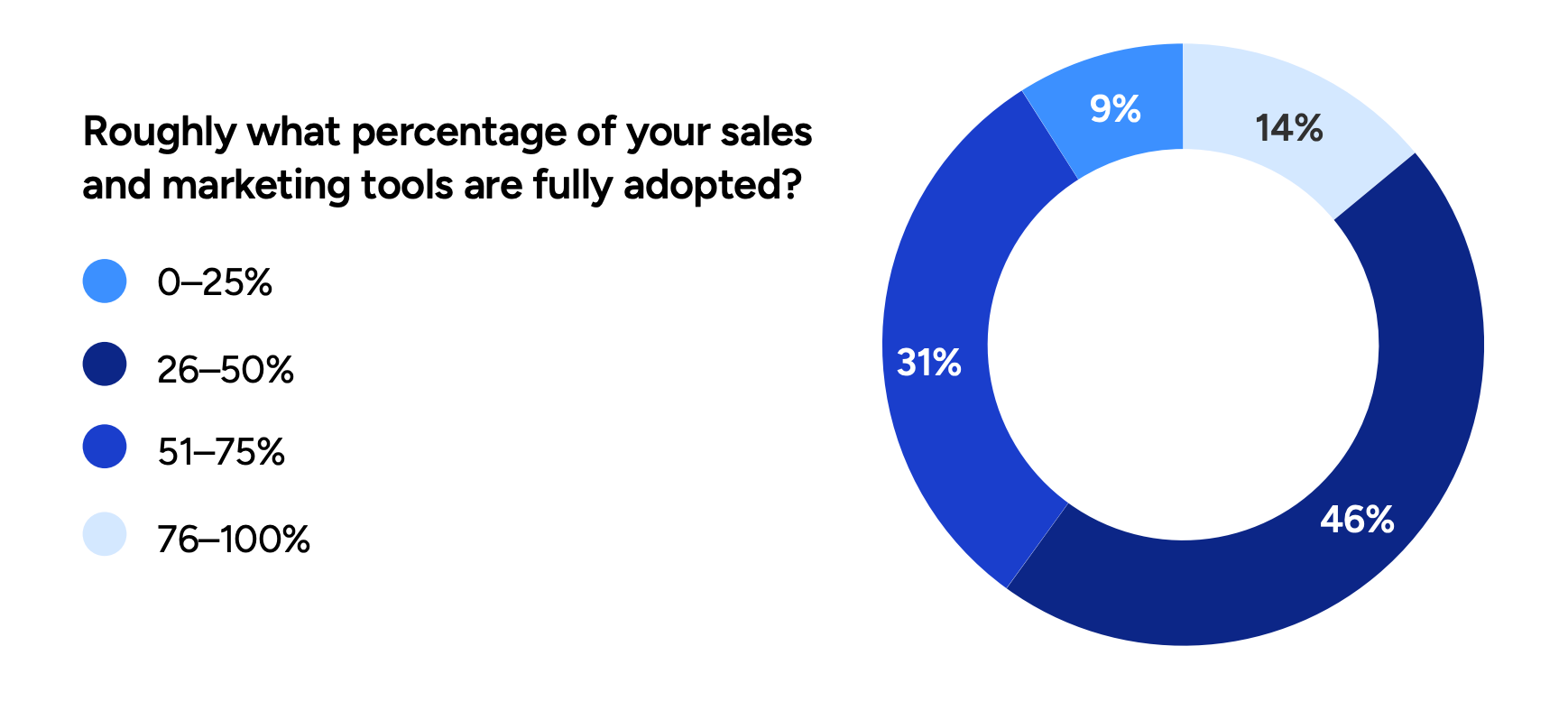
Tool bloat is an insidious contributor to misalignment. 56% of professionals cite tool bloat as a major issue, with 60% of teams using less than half of the tools they pay for. The instinct to "buy our way out of the problem" with a new piece of tech only adds maintenance overhead and creates more data silos. The data is clear: leaner stacks with higher adoption rates consistently outperform bloated, complex software ecosystems.
What Aligned Teams Do Differently
The 56% of teams that qualify as "highly aligned" share distinct operational habits that set them apart:
- Data-Driven Consensus: Aligned teams are 3.5x more likely to have strong cross-functional data sharing. They don’t just talk about the data; they build systems where marketing and sales consume the same reports from the same source.
- Messaging Consistency: These teams ensure that their buyer personas are joint artifacts. By involving sales in the creation of marketing campaigns, they ensure that the language used in ads matches the objections heard on discovery calls.
- Strategic Consolidation: Teams that significantly consolidated their tech stack are 2x more likely to rate their lead quality as "excellent." They prioritize tools that facilitate integration over those that offer isolated features.
Actionable Steps for Better Alignment
To move the needle, SMBs must transition from "talking" to "operating" in sync. The following three moves are the highest-leverage actions an organization can take:
1. Define Shared Personas and Lead Quality
Buyer personas should not be a "marketing-only" project. When sales contributes to the definition of an ideal customer, they take ownership of the leads that come through that pipeline. Defining a lead as "Sales Ready" must be a collaborative contract, not a marketing mandate.
2. Standardize the Handoff Process
A functional handoff requires three things: clear timing (when to call), clear content (what information is passed), and a clear feedback loop (why a lead did or did not convert). Without an SLA (Service Level Agreement) covering these points, the handoff remains a "black hole" where leads go to die.
3. Unify the Analytics Dashboard
Stop measuring success in silos. When marketing and sales are both held accountable for the same conversion rates, the incentive to collaborate becomes a structural necessity rather than a "nice to have."
Implications for Future Growth
As we look toward 2026 and beyond, the competitive landscape for SMBs will only intensify. Those that continue to allow sales and marketing to operate as distinct kingdoms will find their growth hampered by the "alignment tax"—the hidden cost of friction, wasted effort, and missed opportunities.
The path forward is clear: success belongs to the organizations that treat Go-to-Market alignment as an engineering problem. By unifying the data, stripping away the redundant tools, and forcing a shared definition of success, teams can stop fighting each other and start focusing on the only metric that matters: the customer’s journey from awareness to revenue.
For those looking to diagnose their own team’s performance, the full Unbounce report provides 50+ data points to help benchmark your organization against high-performers. In the end, the most effective GTM strategy is simply getting everyone on the same page—and keeping them there.