
By the Business & Technology Editorial Desk
Published: October 24, 2023

Main Facts: The Ubiquity and Pitfalls of Quick Response Technology
In the wake of global shifts toward contactless interactions, Quick Response (QR) codes have transitioned from a niche marketing gimmick into an omnipresent infrastructure of modern commerce. From e-menus in fine-dining establishments and virtual business cards to airport boarding passes and post-delivery feedback forms, these pixelated squares are everywhere.

However, according to industry expert Stanislav Khrustalev, businesses frequently treat QR codes as a silver bullet rather than a delicate touchpoint in a much larger ecosystem. While the public is now thoroughly accustomed to scanning codes via native smartphone cameras, poor execution can drastically undermine user trust. Ineffective placement, unoptimized landing pages, and broken links routinely transform promising marketing campaigns into friction-laden dead ends.

To combat this, business leaders must adopt a holistic checklist that governs the entire lifecycle of a QR code interaction—spanning usage strategy, physical visibility, scanning mechanics, and post-scan digital experiences.

Chronology: The Evolution of QR Codes in Consumer Retail
The journey of the QR code from industrial obscurity to consumer adoption highlights a fascinating timeline of technological maturation:

- The Early Years (Pre-2020): QR codes were primarily utilized in supply chain management and logistics. Consumer-facing applications were sparse, largely because scanning required downloading specialized third-party mobile applications, creating a high barrier to entry.
- The Pandemic Catalyst (2020–2021): Driven by hygiene mandates and social distancing, restaurants, retailers, and public services rapidly adopted contactless solutions. Simultaneously, major smartphone manufacturers (Apple and Android) integrated native QR scanning capabilities directly into default camera software.
- The Over-Saturation Era (2022–Present): With scanning frictionless, businesses flooded the physical and digital landscape with QR codes. Brands began experimenting with branding, deep linking, and analytics. However, widespread implementation exposed severe UX flaws, such as codes placed on high-wear surfaces, transparent windows, or fast-moving transit, prompting the need for standardized design frameworks.
Supporting Data & Case Studies: Best Practices vs. Common Blunders
To understand what constitutes effective QR code implementation, Khrustalev breaks down real-world successes and failures across major international brands.
1. Usage and Context
Not all physical spaces justify a QR code. For instance, shipping company Gruzovichkof paints app store availability on its delivery vans without providing a direct link or code, forcing potential customers to manually search for the application. Conversely, retailer Technopark places scannable QR codes directly on its delivery fleet, allowing onlookers to download the app instantly with zero friction.

2. Visibility and Physical Positioning
Visibility dictates engagement. If a code is positioned outside the customer’s natural line of sight, it will be ignored.

- The IKEA Paradox: IKEA placed QR codes underneath feedback collection terminals. While initially appearing illogical, this precise height and placement drastically simplified the feedback process for visitors using wheelchairs, turning an unconventional layout into an accessibility win.
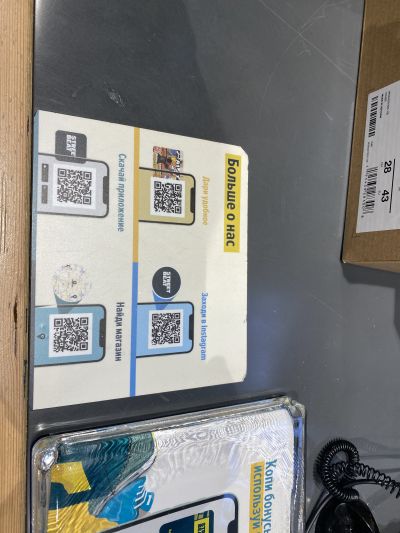
- The Wear and Tear Trap: Sports apparel retailer Street Beat placed promotional QR codes directly on checkout counters. Because these are high-contact surfaces, the stickers quickly degraded, peeling off and projecting an untidy brand image that required constant maintenance.
3. Scanning Mechanics and Environmental Factors
Even the best-designed code is useless if environmental factors render it unreadable.
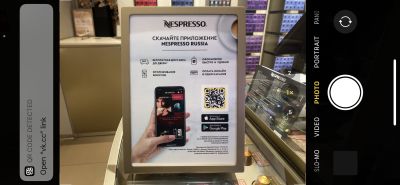
- Surface Transparency Issues: At Nespresso boutiques, promotional codes were printed directly onto transparent storefront glass. Because of the interior lighting and lack of background contrast, the codes were entirely unscannable. Store personnel were forced to awkwardly hold up sheets of white paper behind the glass for customers—a clear indictment of poor pre-planning.
- The Desktop vs. Mobile Paradox: While placing a QR code on a desktop website makes perfect sense—allowing a user browsing on a computer to effortlessly transition to their smartphone—putting a QR code on a mobile website is redundant. Users cannot scan a code displayed on the very device they are holding, highlighting the need for context-aware web design.
4. Digital Navigation and Deep Linking
When a user successfully scans a code, the digital journey has only just begun. Friction at this stage is fatal to conversion rates.

- Cluttered Choices vs. Smart Redirects: Gym and wellness club Persona Sport printed multiple distinct codes on a single wall for different mapping services (Google My Business, Yandex.Maps, 2GIS), overwhelming the user.
- The Uniqlo Standard: Rather than forcing users to manually choose between the Apple App Store and Google Play via multiple fragmented codes, Uniqlo utilizes deep linking. A single QR code automatically detects the user’s operating system and routes them to the correct app store seamlessly.
Official Responses and Expert Recommendations
Industry analysts emphasize that QR codes are merely a bridge between the physical and digital worlds. When brands fail to maintain this bridge, the consequences reflect poorly on corporate digital maturity.

Stanislav Khrustalev’s ongoing checklist serves as a foundational framework for enterprise execution. Key technical recommendations include:

- Color Contrast & Resolution: Always adhere to a dark-on-light color scheme. Inverted codes (light patterns on dark backgrounds) fail on numerous older smartphone models. Furthermore, ensure print resolution is high enough to prevent pixelation or blurring.
- Native App Support: Never mandate a proprietary, branded camera app to scan a code. If users receive an error message when using their native iOS or Android camera, they will abandon the interaction immediately.
- UTM Parameters and Analytics: Leverage UTM tracking codes within URLs. By embedding unique parameters for individual billboards or staff IDs (such as in restaurant tipping systems), businesses can accurately measure offline conversion attribution and personalize the end-user experience.
Implications for the Future of Omnichannel Retail
The widespread adoption of QR codes signals a permanent shift toward blended physical-digital (phygital) retail strategies. However, as consumers become more sophisticated, their tolerance for poorly executed technology diminishes.

Businesses that treat QR codes as an afterthought—slapping unverified, low-contrast, or broken links onto physical assets—risk alienating their customer base. Conversely, organizations that invest in thoughtful placement, robust deep linking, and rigorous post-scan optimization will find that these simple pixelated squares are powerful engines for customer acquisition, data analytics, and brand loyalty.

As this technology continues to evolve, maintaining a meticulous, customer-centric checklist will separate market leaders from those left scrambling to fix broken links.